Some Filipino words are impossible to translate properly, not because English lacks vocabulary, but because Filipino culture packs entire emotions, habits, and life experiences into a single word.
You can explain them, sure. You can even come close. But something always gets lost in translation.
From romance to family drama to emotional damage disguised as humor, here are ten Filipino words that English simply cannot handle properly.
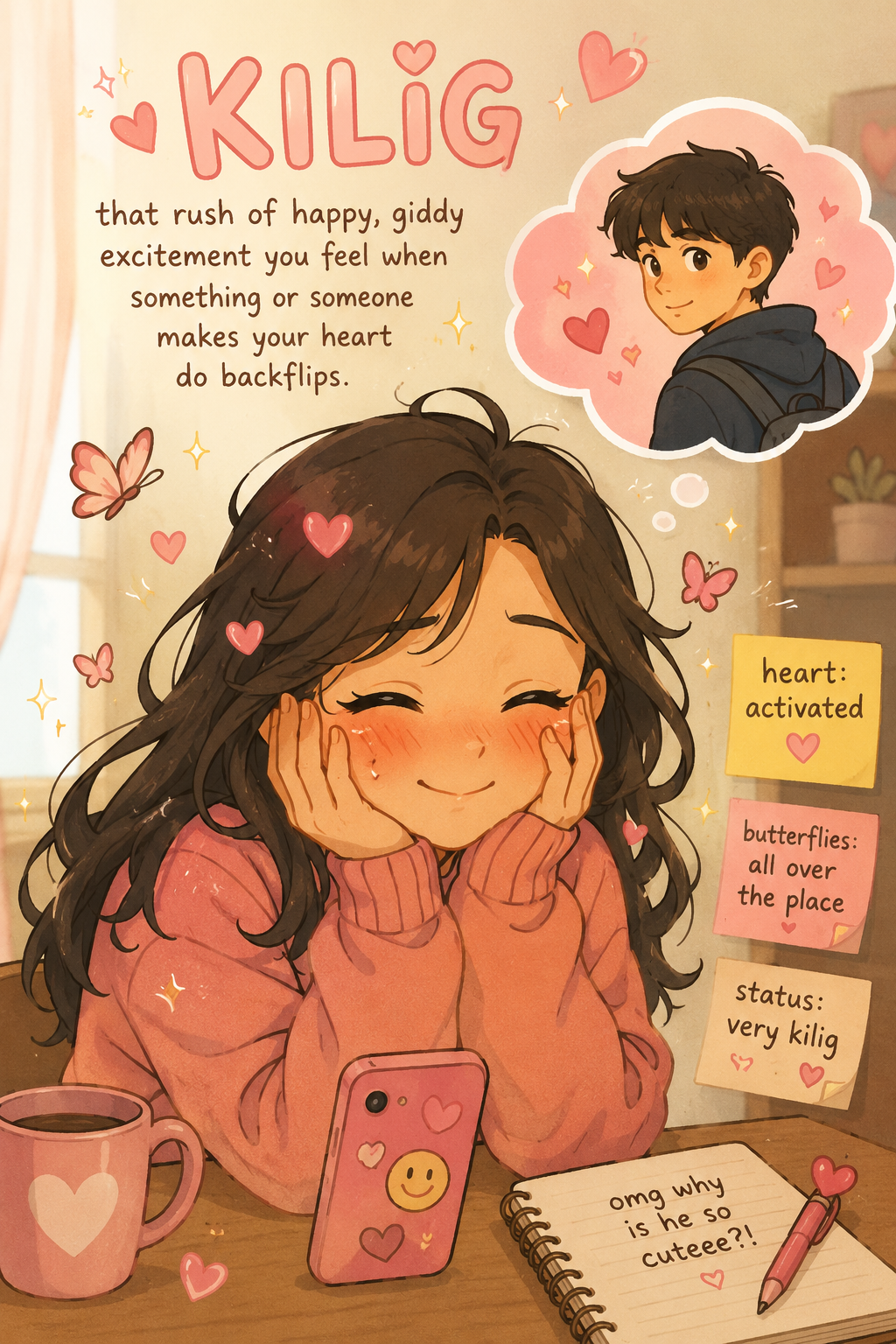
1. Kilig
The undisputed champion of untranslatable Filipino feelings.
“Kilig” is that rush of excitement you feel when your crush notices you, when two people finally hold hands in a movie, or when someone remembers the smallest detail about you. It is butterflies, nervous laughter, and smiling at your phone like a fool all at once.
English has “giddy” or “thrilled,” but neither feels dramatic enough.
2. Gigil
You know that overwhelming urge to squeeze something because it is too cute? That is gigil.
Strangely, Filipinos also use the same word when they are intensely annoyed. So yes, gigil can either end in hugs or violence depending on the situation.
3. Tampo
“Tampo” is not exactly anger. It is softer, quieter, and somehow more emotionally effective.
It is the act of withdrawing affection after getting hurt, hoping the other person notices and fixes the situation without you directly saying what is wrong. A classic Filipino communication style, honestly.
4. Diskarte
A person with “diskarte” knows how to survive anything.
It means being resourceful, strategic, street-smart, and creative under pressure. Filipinos admire people who know how to make things work even with limited resources.
Sometimes it is hustle. Sometimes it is pure improvisation.
5. Umay
The feeling of having too much of something.
Too much food. Too much noise. Too much repetition. Too much social interaction.
After your third plate of lechon at a fiesta or hearing the same karaoke song for the seventh time, congratulations. You are officially umay.
6. Pasalubong
A pasalubong is technically a gift, but emotionally, it means, “I thought about you while I was away.”
It can be expensive or incredibly small. The point is that someone remembered to bring you something home.
And yes, Filipinos absolutely keep track of who forgot.
7. Lihi
One of the most uniquely Filipino concepts surrounding pregnancy.
“Lihi” refers to a pregnant woman’s cravings and fixations, sometimes believed to influence the baby’s appearance or personality. If a mother constantly stared at celebrities during pregnancy, someone will eventually joke that the baby inherited their face.
Scientific evidence may be questionable. Filipino belief in it is not.
8. Basta
Few Filipino words carry more authority than “basta.”
It loosely translates to “just because” or “end of discussion,” but tone changes everything. Parents use it to shut down arguments instantly. Friends use it when they are too tired to explain themselves.
Either way, once someone says basta, the conversation is probably over.
9. Bangungot
English translates this as “nightmare,” but that barely scratches the surface.
In Filipino folklore, bangungot refers to dying in your sleep, often connected to terrifying dreams or supernatural causes. Many Filipinos grew up hearing warnings not to sleep immediately after eating because of it.
Nothing says childhood like being mildly traumatized before bedtime.
10. Lambing
“Lambing” is affection performed with sweetness, softness, and a little bit of strategy.
It is the extra gentle voice someone uses when asking for a favor. The clinginess of a child wanting attention. The playful sweetness between couples after an argument.
English words like “affection” or “sweetness” come close, but they miss the charm and emotional performance behind lambing.
Filipinos do not just show affection. We dramatize it beautifully.
These words reveal something deeper than language. They reflect how Filipinos love, tease, survive, celebrate, and emotionally negotiate with one another every single day.
Some feelings are simply too Filipino to translate cleanly. And honestly, maybe they are better that way.