Have you ever wondered why some churches in the Philippines draw millions of devotees while others quietly serve their local community? Or why do certain church buildings seem more grandiose than others? Join us on a fascinating journey through the world of Catholic churches in the Philippines, where each sacred space tells a unique story of faith, history, and Filipino culture.
The Neighborhood Cornerstone:
Parish Churches Picture this: It’s a sweltering Sunday morning in your hometown. The air fills with the peal of church bells as families stream into the local simbahan, their finest barongs and ternos rustling as they greet neighbors. This quintessential Filipino parish church is the backbone of Catholic community life. Parish churches are the workhorses of Filipino Catholicism.
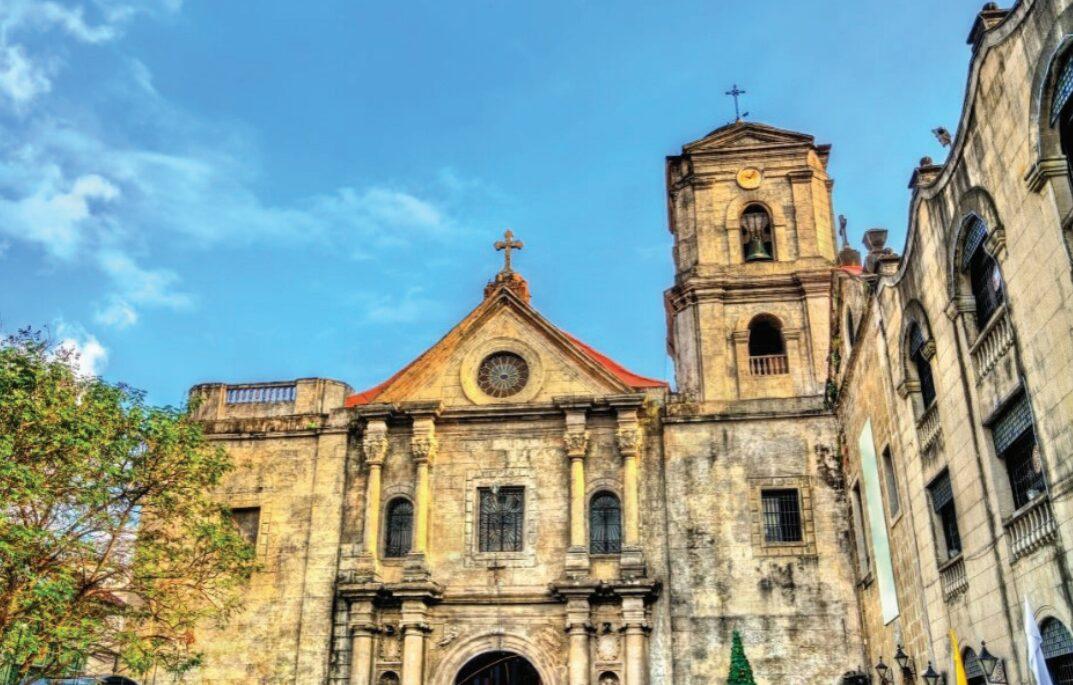
They’re where babies cry through baptisms, nervous couples exchange vows, and families bid tearful goodbyes to loved ones. The parish priest isn’t just a religious figure; he’s a counselor, mediator, and sometimes even a local celebrity. Take the iconic San Agustin Church in Intramuros, Manila. While it boasts the lofty title of basilica, it’s still very much a parish at heart. Its imposing baroque façade belies the warm, lived-in feel inside. Centuries-old wooden pews bear the imprints of countless worshippers, and the air is thick with the weight of prayers whispered over generations. As one of the oldest stone churches in the Philippines, built in 1587, San Agustin has withstood multiple earthquakes and even the ravages of World War II. Despite its grand status, San Agustin hosts daily Masses and yearly fiestas with equal gusto, serving as the spiritual home for locals just like any other parish. Visitors are often amazed to learn that the ornate ceiling paintings are trompe l’oeil, creating an optical illusion of 3D designs.
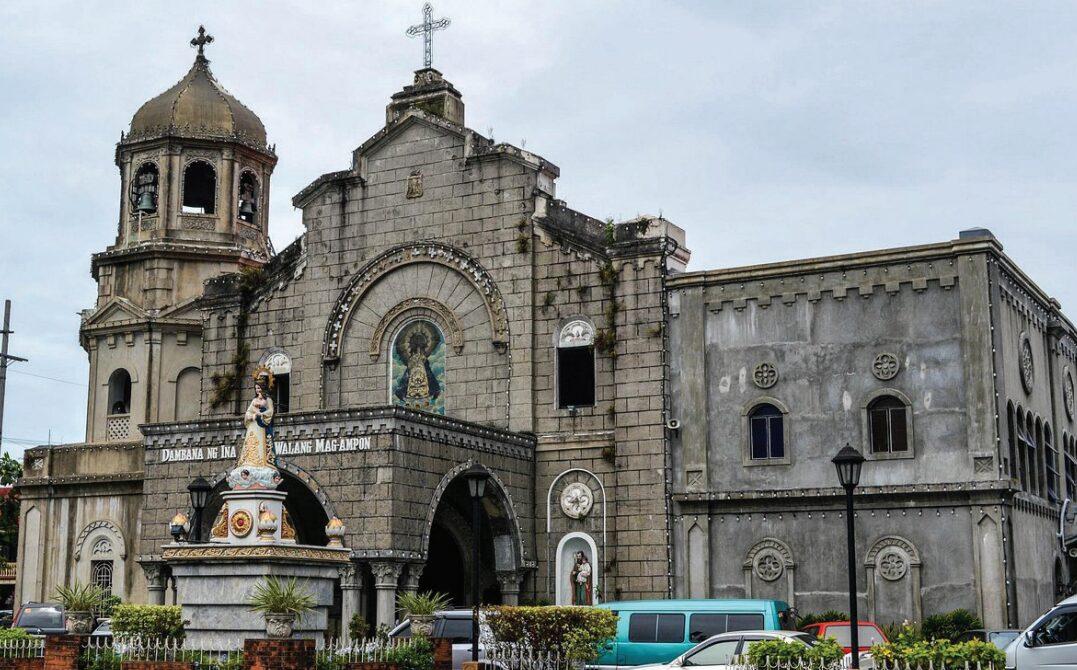
In Marikina City, the Our Lady of the Abandoned Parish reflects the city’s shoemaking heritage with its annual Sapatos Festival. Built-in 1687, this resilient church has withstood numerous floods and earthquakes, standing as a testament to the enduring faith of the Marikeños.
Miraculous Magnets:
Shrines Now, let’s shift gears. It’s Wednesday at Baclaran Church, and the scene couldn’t be more different. The streets are a sea of humanity, with vendors hawking candles and religious trinkets. Inside, the church is packed to the rafters, the air
electric with fervent prayers. Shrines are the rock stars of the church world, drawing pilgrims like moths to a flame. These are churches built around a particular devotion – often to Mary or a beloved saint – and are believed to be conduits for divine intervention. The National Shrine of Our Mother of Perpetual Help (that’s Baclaran’s official name) is a prime example. Every Wednesday, it transforms into a spiritual mosh pit, with up to 100,000 devotees squeezing in for novena services. Built in 1958 to replace an older church destroyed in World War II, Baclaran Church has become a symbol of post-war spiritual revival. It holds a staggering 21 masses every Wednesday, a testament to its popularity. The air is thick with whispered petitions and the smoke of countless candles. It’s a sensory overload, a uniquely Filipino blend of faith, folklore, and fervor that has to be seen to be believed.
In Quezon City, the National Shrine of Our Lady of the Holy Rosary of La Naval de Manila has become a beacon for Marian devotees. This shrine, originally built in Intramuros in the 17th century, was reconstructed in its current location after World War II. It houses the venerated image of Our Lady of La Naval, which has been associated with several naval victories and is considered one of the oldest Marian images in the Philippines. The shrine’s Baroque-inspired architecture, with its ornate retablo and intricate carvings, reflects the Spanish colonial influence on Filipino religious art. Not far from there, the National Shrine of Our Lady of Mount Carmel sees devotees streaming in to venerate the image of Our Lady of Mount Carmel, especially during her feast day. Established in 1954, this shrine has survived urban development and natural disasters. Its dome, adorned with a 24-karat goldplated cross, serves as a shining beacon of faith. These shrines highlight the strong Marian devotion in Filipino Catholicism and how historical structures continue to be centers of fervent spirituality in modern times.
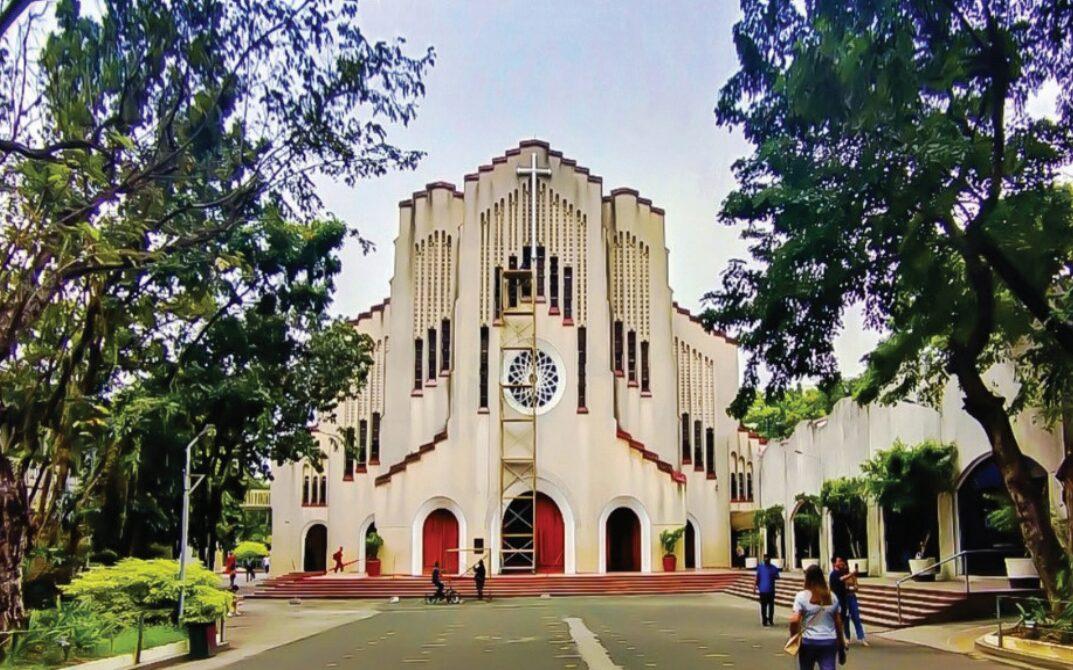
Not far from there, the National Shrine of Our Lady of Mount Carmel sees devotees streaming in to venerate the image of Our Lady of Mount Carmel, especially during her feast day. Established in 1954, this shrine has survived urban development and natural disasters. Its dome, adorned with a 24-karat gold-plated cross, serves as a shining beacon of faith. These shrines highlight the strong Marian devotion in
Filipino Catholicism and how modern structures can become new centers of fervent spirituality.
The Bishop’s Throne:
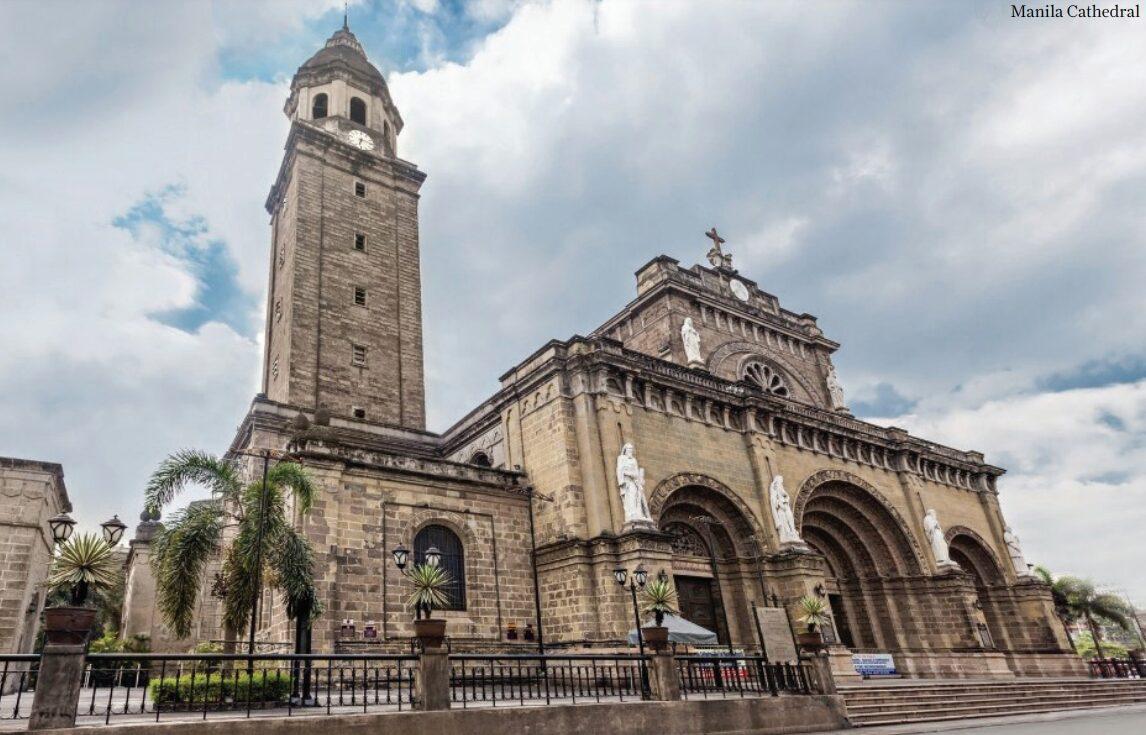
Cathedrals Imagine a church so important that it’s like the “Malacañang” of a diocese. That’s a cathedral for you. These churches are where the bishop hangs his hat (or in this case, his mitre). Step into Manila Cathedral, and you’ll immediately sense the difference. The soaring ceilings, intricate stained glass, and gleaming marble speak of grandeur and authority. This isn’t just any church – it’s the flagship of the Archdiocese of Manila. Cathedrals are the VIPs of the church world, serving as the seat of the bishop and the nerve center of a diocese.
During major celebrations, you might see bishops in their ornate regalia, their curved crosiers symbolizing their role as shepherds of the faithful. But Manila Cathedral is more than just a pretty face or a postcard-perfect backdrop for Intramuros selfies. Its walls have witnessed coronations, papal visits, and even withstood World War II bombings. Originally built in 1581, it has been rebuilt eight times due to various calamities, with the current structure dating from 1958. It’s the only church in the Philippines to have hosted three papal visits – by Pope Paul VI, Pope John Paul II, and Pope Francis. When you attend Mass here, you’re not just participating in a religious service – you’re stepping into a living museum of Philippine history.
The Cebu Metropolitan Cathedral serves as a testament to the city’s status as the cradle of Philippine Christianity. First built in 1595 and rebuilt several times due to fires and World War II damage, its façade uniquely integrates indigenous Filipino, Muslim, and Spanish designs. Up in the mountains, the Baguio Cathedral, with its distinct pink exterior and twin spires, has become an iconic landmark in the City of Pines. Built in 1936, it served as an evacuation center during World War II. Its distinctive color comes from the volcanic stones
used in its construction, demonstrating how cathedrals often become symbols of their cities while reflecting local geography and history.
Papal VIPs:
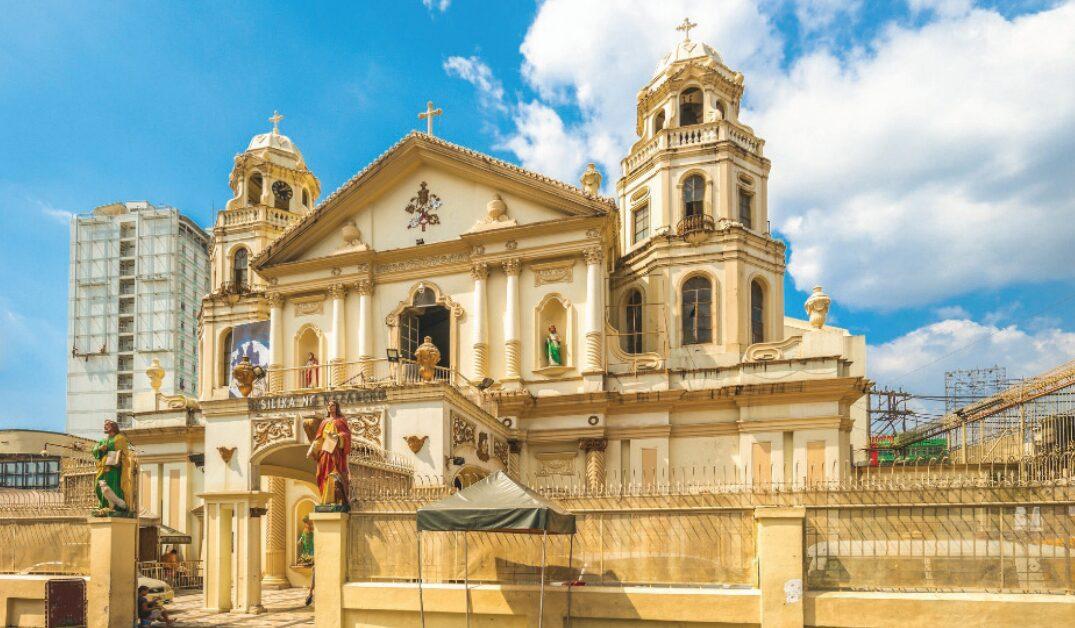
Basilicas If churches had a hall of fame, basilicas would be the inductees. These churches have received a special nod from the Pope himself, often due to their historical or spiritual significance. It’s like a papal seal of approval for their incredible impact on Filipino faith and culture. Step into Quiapo Church, officially the Minor Basilica of the Black Nazarene. The first thing that hits you is the press of bodies – devotees inching forward to touch or kiss the famous statue of Christ. The air is heavy with incense and sweat, punctuated by impassioned cries of “Viva! Viva!” Quiapo’s basilica status is a nod to its cultural impact. Its famous statue of Jesus attracts millions during the annual Traslación procession, turning Manila’s streets into a heaving mass of humanity. The original structure was built in 1587, but the current church dates from 1984, having been rebuilt multiple times after fires and earthquakes. Interestingly, the image of
the Black Nazarene survived a fire in 1791 that destroyed the church, adding to its mystique. Millions of barefoot devotees jostle for a chance to touch the sacred image. It’s Catholicism with a distinctly Filipino flavor – passionate, physical, and deeply personal.
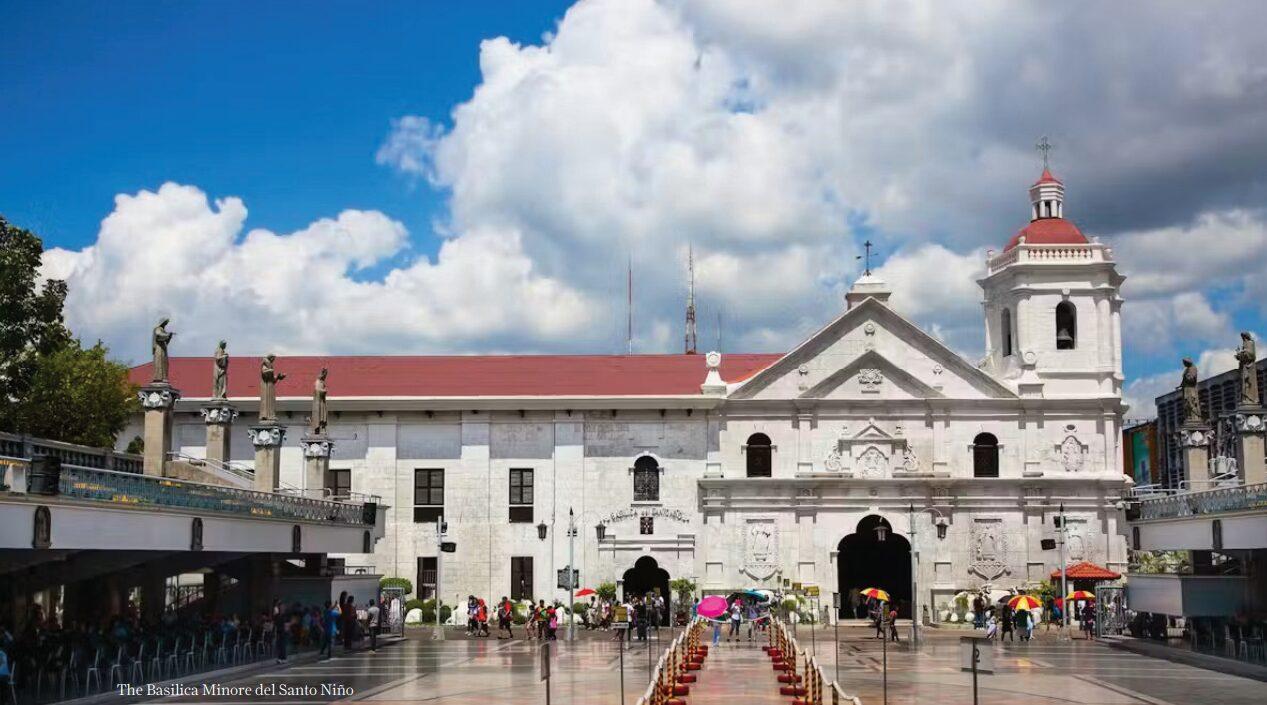
In Cebu, the Basilica Minore del Santo Niño houses the country’s oldest religious relic, the Santo Niño statue, linking the present to the very beginnings of Christianity in the Philippines. Founded in 1565 and rebuilt multiple times, the church stands on the very spot where the image of Santo Niño was found by Spanish explorers. Far to the north, Our Lady of Piat Basilica in Cagayan stands as a testament to the strong Marian devotion in Northern Luzon. The original chapel was built in the 1600s, with the current structure dating from the 1980s. It houses one of the oldest Marian images in the Philippines, brought from Macau in 1604. These basilicas show how they can reflect regional spiritual characteristics while preserving centuries of religious history.
Beyond the Labels
Here’s where our church story takes an unexpected turn. These categories aren’t rigid boxes but fluid concepts that often overlap. Many churches wear multiple hats, serving various roles in the community and the broader Church. Consider the Manila Cathedral. It’s not just the seat of the Archbishop of Manila, but also a minor basilica, a parish church for the Intramuros community, and a popular shrine for
Marian devotees. Or take the Basilica Minore del Santo Niño in Cebu – it’s a basilica, a parish church, and one of the country’s most visited shrines. This multifaceted nature reflects the complexity and richness of Filipino Catholicism itself. Just as our faith intertwines with our cultural identity, our churches embody various aspects of our spiritual and community life.
Beyond the labels of parish, shrine, cathedral, or basilica, each church tells a unique story of faith, history, and Filipino ingenuity. Why not challenge yourself to explore a church you’ve never visited before? You might stumble upon a hidden artistic masterpiece in a humble parish church, witness a soul-stirring devotion in a packed shrine, or feel the weight of history in a centuries-old cathedral. These sacred spaces are more than just buildings – they’re living repositories of Philippine culture and spirituality. Each visit can be a journey of discovery, revealing new facets of our shared heritage and faith. Who knows? In exploring these churches, you might just uncover new dimensions of your own spiritual journey. So go ahead, push open those heavy wooden doors, breathe in the scent of candles and incense, and let yourself be transported. After all, in the tapestry of Philippine Catholicism, every church has a story, and every visit can be a homecoming.