
El Nido was everything the photos promised and then more. There is something the Philippine waters do to you that I have never been able to explain to anyone who has not been in it. You float, and everything you have been carrying quietly lets go.
By Hanadi Ahmad
I have lived in California for over two decades now. I left the Philippines in 2003 carrying a one-way ticket, and the kind of quiet optimism that only makes sense when you are twenty-something and the future feels wide open. I told myself it was a beginning, not a departure. I told myself I would be back all the time.
And I did come back. A handful of times over the years, fitting trips in between the rhythms of a life that kept building itself around me: a career that demanded more than I expected, an American routine that became its own kind of home. Each visit felt too short. Each goodbye at the airport felt heavier than the last. And then somehow, between one thing and another, seven years passed between my 2018 trip and this one.
Seven years. Long enough for children to grow into adults. Long enough for the city to rearrange itself. Long enough to feel, upon landing, like a visitor in the place that made you.
I did not realize how much I had been carrying the weight of that absence until the plane began its descent and I looked out the window and saw it all below me again. The coastline. The clusters of green. Manila sprawling in every direction. And something inside my chest just gave way.
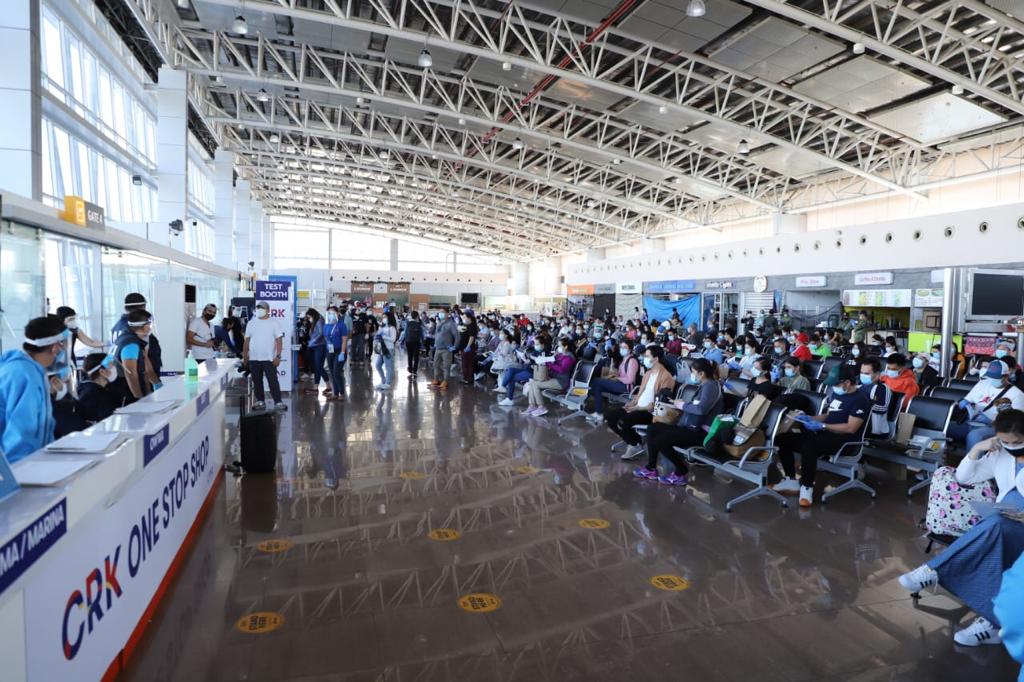
The airport arrivals hall smelled the same. That is the thing nobody tells you about homecoming: it is the smallest, most ordinary details that undo you. Not the grand landmarks or the sweeping views, but the smell of the air, the particular way the light falls at that hour, the sound of Tagalog and Taglish wrapped around each other in the crowd.
As soon as I stepped out of the airport, I knew this trip would be different from the ones before it. It would be longer, more intentional, and shaped by a quiet urgency I had not felt in previous visits.
I was not just passing through. I was coming back.
FIRST TIME IN EL NIDO
The first leg of the trip was one I had never done before. My mother and I flew directly into Lio Airport in El Nido, Palawan, joined by my cousin Billy and my Aunt Baby, who is my mother’s closest friend and my ninang, and a small group of her friends who had organized the whole thing with the kind of cheerful efficiency that only a certain generation of Filipino women possesses.
Lio Airport is a small, open-air terminal that sets the tone for El Nido immediately. There is no grand arrival hall, no conveyor belt rumbling in a fluorescent-lit baggage claim. You step off the plane and you are already outside, already breathing warm Palawan air, already squinting into a sky that is a shade of blue you forget exists until you are back under it.
We were there for several days, and we did Tours A and C, which between them cover a generous stretch of the Bacuit Archipelago. Tour A brought us through the Big Lagoon and the Small Lagoon, both accessed by kayak through narrow gaps in the limestone cliffs. The Big Lagoon opens up into something almost theatrical: sheer rock walls rising on every side, the water shifting from teal to deep green depending on the light, the only sound your own paddle and the occasional bird overhead. The Small Lagoon is more intimate. You navigate it in near-silence and emerge into a basin so enclosed and so still it feels like the rest of the world has been temporarily switched off.
Tour C took us to Snake Island, named for the long, curving sandbar that stretches out from it at low tide, and to Matinloc Shrine, a small chapel perched on a cliffside overlooking the sea. Standing there, with water on three sides and nothing but open horizon beyond, it was one of those moments that makes you feel very small in the best possible way.
The food in El Nido was as good as the scenery, which is saying something. Fresh seafood grilled simply and served with rice and vinegar dipping sauce. Plates of kinilaw. Coconut-based dishes that tasted like someone’s grandmother made them, because someone’s grandmother probably did. We ate most of our meals at small, unhurried restaurants near the water, the kind where the menu is handwritten and the portions are generous and nobody rushes you out.
For my mother, this trip was a reunion with friends she does not see nearly enough. For Ninang Baby, it was a chance to hold court in a beautiful setting, which she did with great enthusiasm. For Billy and me, it was the beginning of something we had been meaning to do for years. El Nido has a way of making you wonder why you waited so long.
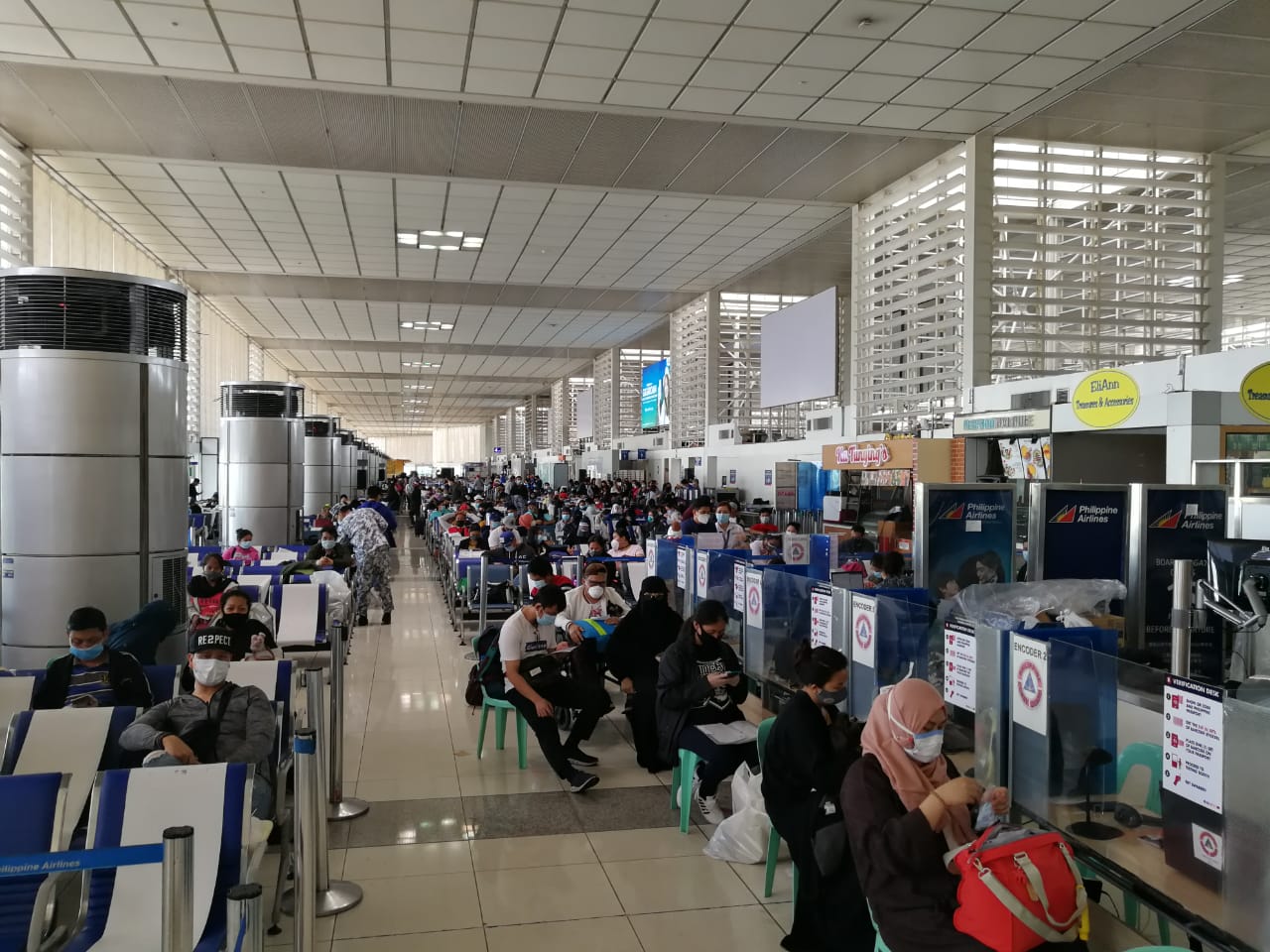
After El Nido, we flew back to Manila, and here is the part of the trip that does not make it into anyone’s travel reel but is somehow one of the most Filipino experiences of the whole journey: waiting at the airport with cousins.
Billy and I arrived at NAIA ahead of our Boracay flight and met up with other cousins, Franz, who had come from Tarlac, and Lance, who had come from Mandaluyong City. We had a few hours between flights, so we did what Filipino families do in airports: we found a food court, we ordered more than we needed, and we talked. Just talked. About everything and nothing. About who had changed and who had not. About the years that had passed. It was not a planned activity, but it ended up being one of the most grounding parts of the whole trip, sitting under airport fluorescent lights eating and catching up on seven years in a single layover.
BORACAY, THEN AND NOW
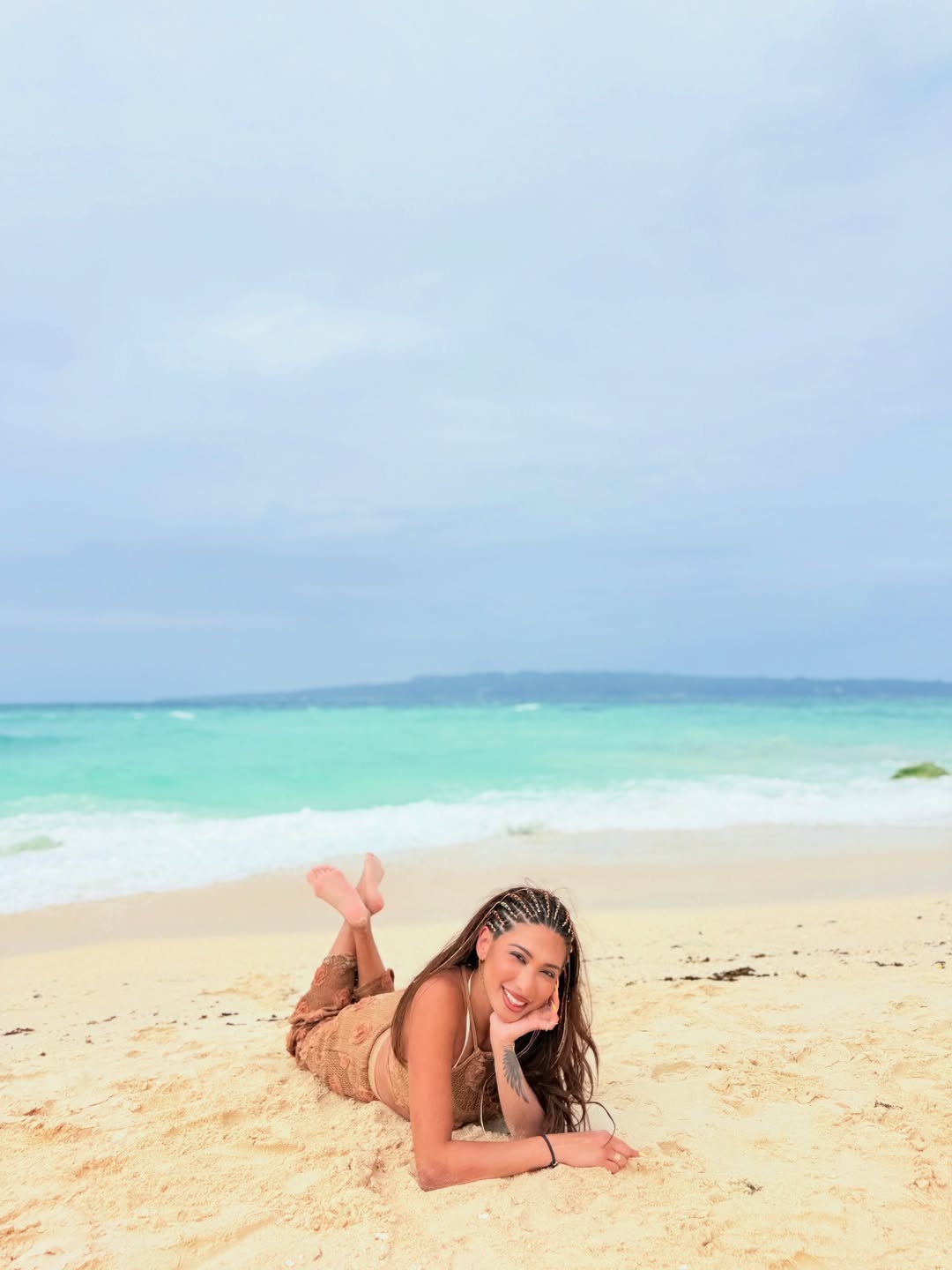
The last time I was in Boracay was in 2003, just before I migrated to the US. I was only 14 and the island felt like a send-off, a last long look at the kind of beauty you do not fully appreciate until you are about to leave it behind. White Beach was already famous then, already busy, but there was still a looseness to it, a sense that the island was operating on its own unhurried schedule.
Twenty-three years later, Boracay is a more polished version of itself. The beachfront is better organized, the resorts have multiplied and upgraded, and the strip has the confident hum of a destination that knows exactly what it is. What has not changed is the sand, which remains absurdly, almost unreasonably fine and white, and the water, which is still that particular shade of blue-green that looks digitally enhanced even when you are standing directly in front of it.
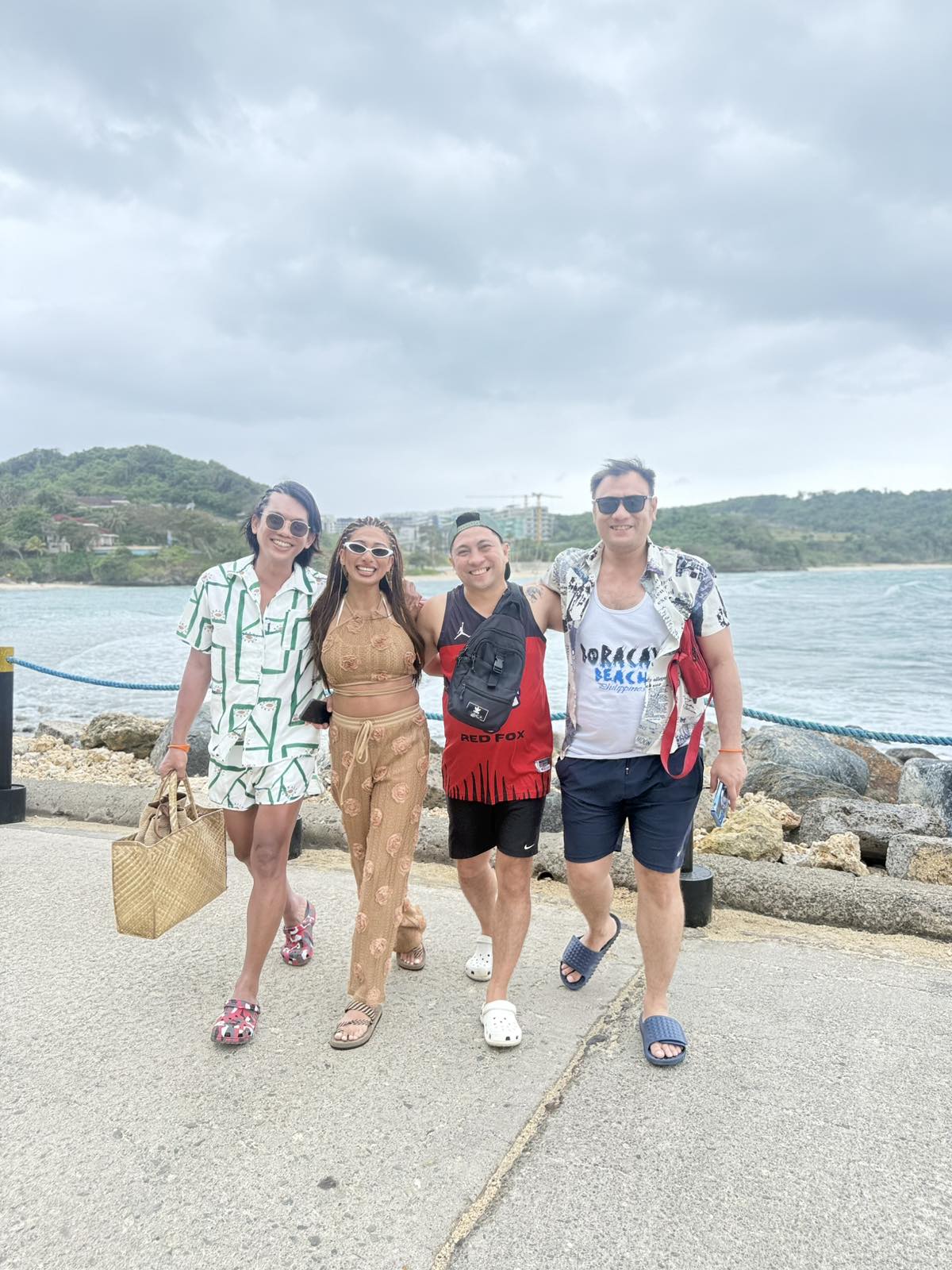

What surprised me most, though, was how much I had changed in the time between visits. At 13, Boracay was a backdrop for spontaneity. At this point in my life, it was something slower and more deliberate. I noticed different things. I appreciated the sunset in a way that felt more conscious, more grateful, less distracted. I was present in a way I am not sure I was capable of being the first time around.
The four of us had grown up together in Mandaluyong City. We were the cousins who spent holidays in each other’s houses, who knew each other’s childhood embarrassments and family dynamics and inside jokes that have no rational explanation but have survived decades anyway. Being in Boracay with them felt like picking up a conversation that had been on pause for years. The setting was different. The people were older. The conversation was the same.
WHY THE EXPERIENCE MATTERS MORE THAN THE DESTINATION
Travel has a way of slowing time down, of creating memories that outlast the trip itself. For Filipino families, some of the most treasured moments happen not at home but somewhere out in the world together: an OFW finally back after years away, a balikbayan treating the whole barkada to a trip they have been talking about for years, cousins who grew up on the same street finding their way back to each other from different cities and different countries and different versions of their lives.
What I know now, having done this trip, is that the destination shapes the memory but does not make it. The families who get the most out of travel are usually the ones who show up with open hearts and a willingness to be present. Not every moment needs to be an activity. Not every hour needs to be accounted for. Some of the best parts of this trip were the meals that ran long, the conversations that went in unexpected directions, and the quiet evenings that nobody planned for.
Leave room for those. They are usually the ones you remember most.
I flew back to California with a full suitcase and the particular kind of tiredness that comes not from depletion but from fullness. I had done a lot. I had seen a lot. More than that, I had been present for a stretch of time that felt genuinely mine, grounded in people and places that have always been part of who I am, even when I am far from them.
There are still places I did not get to. Parts of the country I have been meaning to visit for years and keep deferring. Parts of my own family’s story I want to go back and spend more time in. This trip felt less like a conclusion and more like a door reopening.
I am already planning the return. Same people, new destinations, more time. The Philippines has a way of making sure you always have a reason to come back. I have never needed much convincing.