Long before Filipinos board a plane home for the holidays, they begin another kind of journey. It starts with a cardboard box, a roll of packing tape, and the quiet hope that love can fit inside.
The story always begins the same way. Somewhere in a quiet apartment far from the Philippines, a Filipino worker crouches beside a half-packed cardboard box. Around them is a careful kind of chaos: rows of canned corned beef and sardines stacked neatly on one side, bags of instant noodles tucked beside boxes of chocolates wrapped in gold foil. A pair of white sneakers sits on top of folded jeans. Shampoo bottles, coffee sachets, and tins of cookies wait their turn, each one labeled with a name written in permanent marker: For Nanay. For Bunso. For Ate.
The sound of packing tape slices through the quiet. The scent of soap and chocolate mixes in the air. Piece by piece, the box begins to take shape not just as cargo, but as a message. It will take weeks before it is full, and that is all right. Because this is not a task to rush. This is a ritual. Every layer is a promise. Every item is love, folded, sealed, and ready to travel home.
The balikbayan box remains one of the most powerful symbols of Filipino love, crossing oceans, carrying stories, and coming home all year round.
BRIDGING WORLDS
The balikbayan box has its roots in the late 1970s, when Filipinos abroad longed to send more than letters home. They wanted to send comfort, care, and a sense of presence. Shipping companies saw this need and offered big, sturdy boxes that could carry more than just goods. In time, those boxes carried love, memory, and the promise of reunion.
What began as a way to send supplies turned into something more meaningful. Families came to see these boxes as proof of care and connection. They were reminders that even from far away, loved ones could still take part in birthdays, anniversaries, and everyday life. Each box carried not just goods, but gratitude, sacrifice, and pride.
FAMILY TRADITION
The process is always slow and deliberate. It begins months before the holidays or before someone’s birthday. On each payday, one or two new items are added to the box. There is no strict plan, only a quiet intention to fill it with things that say, “I remember you.”
When the day comes to send it off, the box is taped tightly, wrapped with twine, and sometimes covered in stickers and handwritten notes. Then begins the waiting. For weeks, families in the Philippines track its journey, counting down the days until the delivery truck pulls up to their gate.
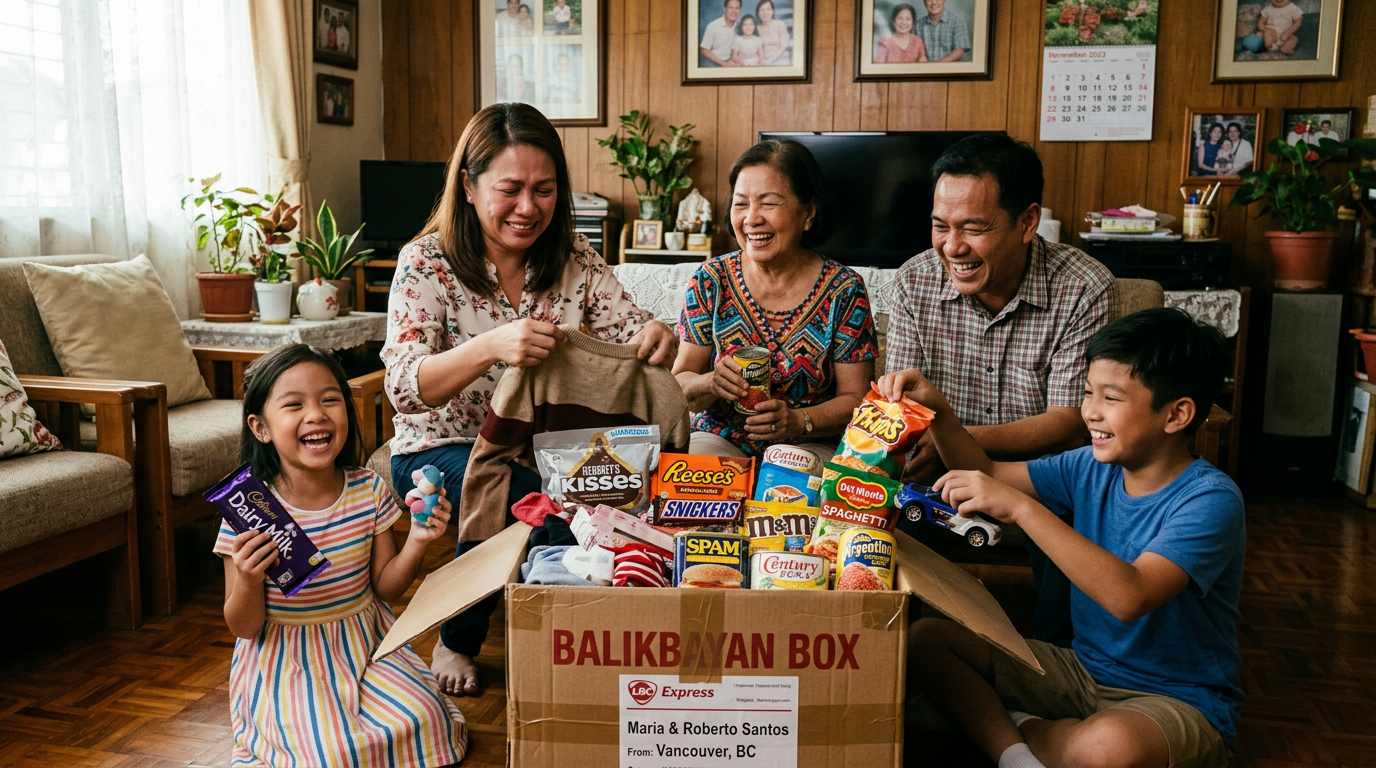
Opening the box is an event of its own. Parents and children gather around. Someone carefully cuts through the layers of tape. The smell of imported chocolate fills the room. One by one, the treasures emerge, each item greeted with laughter, curiosity, and gratitude. For a moment, the room feels full again, as if the sender has just walked through the door.
MODERN MEANING
In a world of instant messaging and online shopping, one might think the balikbayan box would fade away. Yet it has only changed shape. Many senders now include gifts that reflect their lives abroad: local delicacies, small crafts, letters, or souvenirs that tell a story. Some families send boxes in reverse, shipping Filipino treats to relatives overseas who crave the flavors of home.
Technology has also changed how the boxes travel. Apps now allow tracking from door to door. Shipping companies offer digital receipts, insurance, and pickup services. But even with these conveniences, the heart of the tradition remains the same. The act of packing and sending still holds the same weight it did decades ago. It is the physical proof of love that cannot be reduced to a click or a call.
LIVING SYMBOL
Although balikbayan boxes surge during Christmas, they are sent throughout the year. They mark milestones and quiet days alike. Some are sent after promotions, others after a long silence, and many just because. They travel during birthdays, school graduations, and family emergencies. They arrive when words are not enough.
Each box carries a part of the sender’s life. It represents months of work, moments of longing, and the simple wish to stay connected. For many overseas Filipinos, the act of sending one is a way of staying rooted. It is a reminder that no matter where they go, home is never too far to reach.
The balikbayan box has become an icon of Filipino generosity and resilience. It supports entire industries, from logistics workers to warehouse packers, and contributes to the steady flow of goods that keeps families supported. But beyond its economic value lies its emotional weight.
Every box is an expression of the Filipino spirit: hardworking, hopeful, and boundlessly giving. It is a message that says, “I have not forgotten you,” sent across thousands of miles. It is love that takes a physical form, wrapped in cardboard and tied with string.
WHAT ENDURES
The balikbayan box reminds us that distance is not just a measure of miles but of meaning. It shows how generosity can survive separation and how connection can endure even in the smallest of gestures. It teaches patience, gratitude, and devotion in their most practical form.
Every day, thousands of boxes continue their journeys across the sea. They do not all arrive during the holidays. Some arrive on rainy afternoons in June, or in the heat of August, or just before the school year begins. Yet each one carries the same message: love does not follow a calendar.
The balikbayan box endures because it captures something permanent about being Filipino. It is proof that home is not only where we live, but also where we send a piece of ourselves to be remembered. And when that box is opened, no matter the time of year, what spills out is not just what was packed, but what has always been there: care, faith, and the quiet promise that love always finds its way home.