There is something irresistible about tracing a country from end to end. To feel its shape not on a map, but beneath your wheels. For many travelers, the Philippines may not seem built for such a dream. It is, after all, a nation scattered across the sea. Yet that is exactly what makes the idea of a grand land trip so thrilling. To see the islands connected by road and ferry, to move through mountains and coastlines and cities in one continuous journey, is to rediscover how boundless this country can be.
The Great Philippine Road Trip 2026 is not only an adventure but a celebration of connection. It is a promise that the archipelago can be experienced in one long breath, from the top of Luzon to the edge of Mindanao, through highways, bridges, and crossings that have always been there, waiting.
FROM THE NORTH
The road begins where the windmills turn in Ilocos Norte, where the sea roars against the cliffs of Pagudpud and the sun falls gently over tobacco fields. It winds past the heritage streets of Vigan and into the mountain roads of the Cordilleras, where pine trees whisper and the air grows cool. The Maharlika Highway becomes both guide and companion, threading through rice terraces, rivers, and small towns painted with murals of jeepneys and saints.
In Baguio, the city of fog and flowers, travelers pause for coffee before descending to the plains once again. Each stretch of road reveals a different face of Luzon, from bustling Pampanga kitchens to quiet Quezon towns lined with coconut trees. Every kilometer holds a different accent, a new kind of laughter, and another version of home.
THROUGH THE HEART
Manila appears like a heartbeat in the center of the journey. It is chaotic, yes, but it hums with history and possibility. Here, travelers refuel not just with gas but with culture. There are stories in every street corner of Intramuros, flavors layered in every meal in Binondo, and songs echoing from jeepney radios during the evening rush. Manila is where you remember that the road is not just for escape but for encounter.
Heading south, the highway stretches to Bicol where the view suddenly opens and Mount Mayon rises, serene and perfect. Here, the days taste of pili nuts and chili, and the nights are warm with conversation. The end of Luzon comes quietly at Matnog Port, where the road meets the sea. But the journey does not stop. It simply changes rhythm.
ACROSS THE WATER
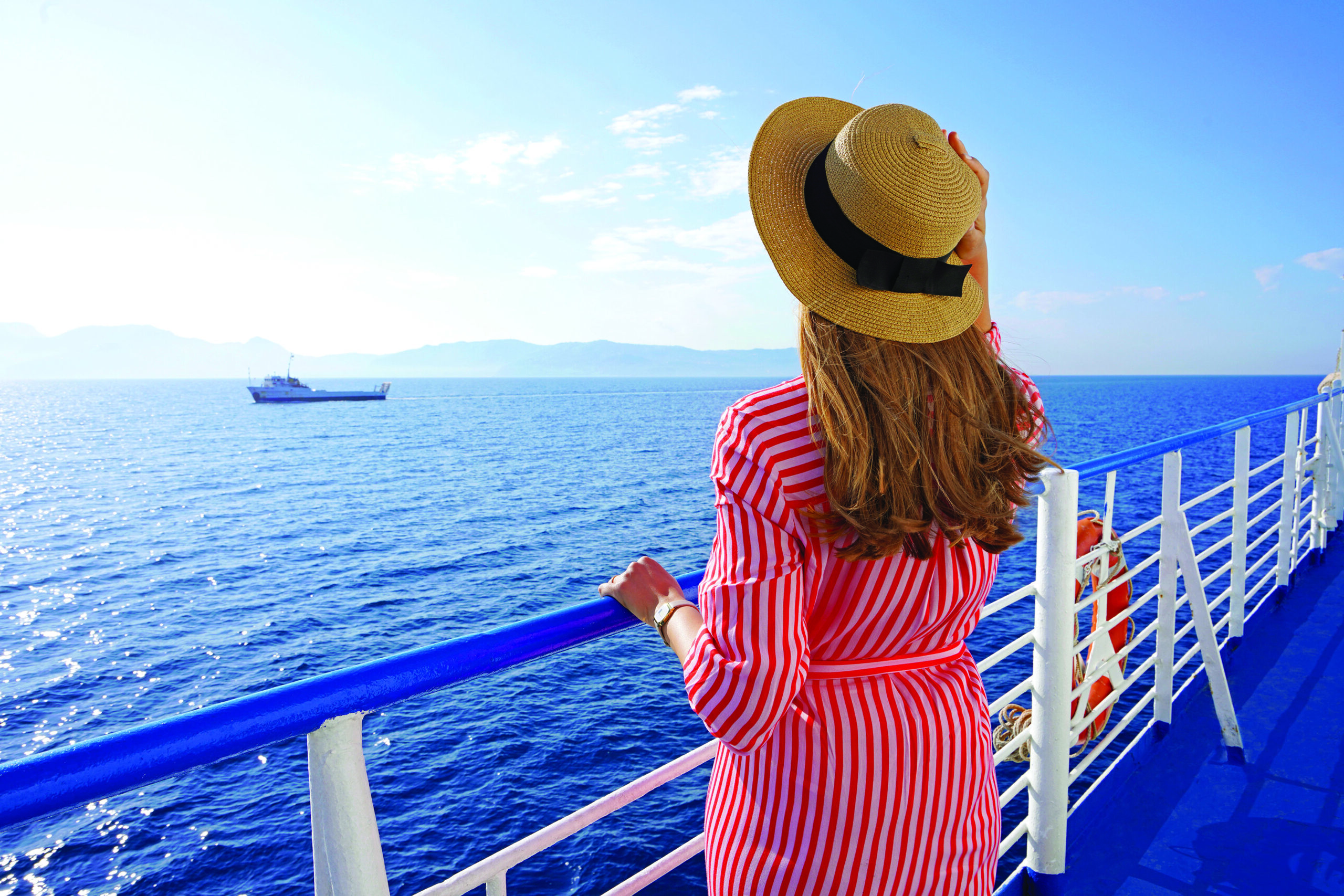
The first ferry crossing, from Matnog to Samar, is the moment where the road trip becomes something larger than itself. The car rolls onto the deck, the sea wind fills the air, and for a few hours the horizon is all water. It is here that the beauty of the archipelago reveals itself most clearly. The Philippines was never meant to be rushed. It was meant to be crossed slowly, with patience, awe, and salt on the skin.
When the ferry docks in Samar, the road resumes. The asphalt stretches across rolling hills and sleepy fishing towns until it reaches the graceful curve of the San Juanico Bridge. This bridge, connecting Samar and Leyte, is not just steel and concrete. It is the spine of a story, proof that even water cannot keep the islands apart.
SOUTHBOUND SPIRIT
From Leyte, the journey continues to the port towns that open the way to Mindanao. The ferry ride to Surigao is quiet, often timed with sunrise. When the wheels touch the Mindanao road, everything feels broader, greener, more open. Here, the highways glide past coconut groves and wide rivers, past bustling wet markets and long stretches of countryside where the air smells of earth and rain.
Cagayan de Oro greets travelers with adventure, Iligan with waterfalls, Davao with fruit stands and order. In every city, the people talk about new roads being built, new ferries connecting ports, and how much closer the islands are becoming. The journey’s symbolic end lies in General Santos, the southern gateway to the sea. But anyone who makes it this far knows that endings are only pauses. The road, like the country, keeps going.
ONE LONG ROAD
To cross the Philippines by land and ferry is to understand how each island is part of a larger whole. The journey is not always smooth. There are delays at ports, potholes on backroads, and sudden rainstorms that blur the windshield. But there are also quiet mornings in mountain towns, children waving from tricycles, and sunsets that seem to last longer than they should. The road is imperfect, and that is precisely its charm.
Every crossing reminds the traveler that the Philippines is a country of connections. Bridges and ferries are not barriers but lifelines. They link people, memories, and stories. By 2026, as new highways open and the RORO system grows even stronger, this dream of driving across the islands will no longer feel far-fetched. It will be something Filipinos can claim as their own adventure.
THE JOURNEY AHEAD
To take the Great Philippine Road Trip is to see the archipelago not as a collection of islands, but as one living, breathing landscape. It is an invitation to slow down and listen to the rhythm of each region. It is a reminder that the best way to know the country is to move through it — to follow its roads, cross its waters, and let its many faces greet you at every turn.
Because in the end, the Philippines was never meant to be seen from the sky. It was meant to be felt from the ground. And somewhere between the hum of the engine, the laughter of strangers, and the salt air of a morning ferry, you find not just a route, but a reason to keep traveling.