Before Wi-Fi, We Waited by the Phone
By Kathryna Zamosa
There was a ritual to it. You did not just call. You prepared.
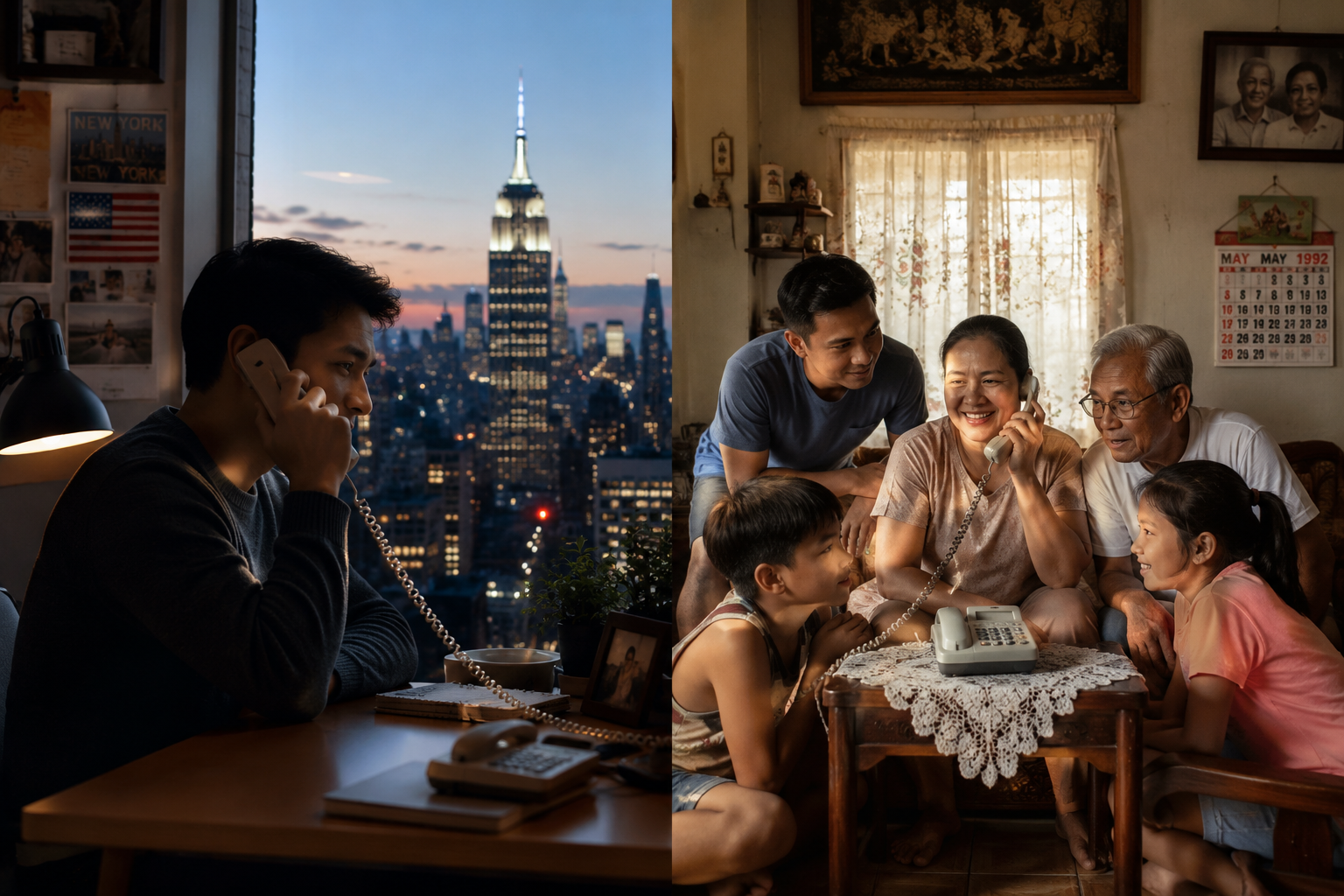
Someone would go to the palengke a little earlier that week, making sure there was something worth reporting. The house would be tidied, not for guests but for the conversation, as if the person on the other end could somehow sense the clutter through the line. And then at the appointed hour, the whole family would gather around the telephone in the sala, the one with the long cord that never quite reached the kitchen, and wait for it to ring.
When it did, everyone talked at once.
Long distance calls in the eighties and nineties were not casual. They were events. They cost more per minute than most families spent on a meal, which meant every second carried the particular weight of something precious being used up. You did not ramble. You did not pause too long. You said what mattered, laughed when you could, and swallowed the things that would take too long to explain because the timer, invisible but very real, was always running. Lola would take the phone last, usually, and say almost nothing, just listen to the voice on the other end with her eyes closed, holding the receiver with both hands like it might slip away.
When the call ended, the silence in the room had a different texture than it did before.
For the OFW generation that built this country on remittances and sacrifice, communication was not a convenience. It was the lifeline that kept families whole across impossible distances. Cassette tapes went back and forth in balikbayan boxes, voices recorded in the kitchen after dinner, carrying the sounds of children who were growing up faster than anyone had planned for. Letters arrived weeks late, the handwriting familiar enough to ache. A photograph tucked into an envelope was a whole season compressed into a single image.
The effort was the love. The waiting was the love. The crackle on the line and the operator cutting in and the desperate last words before the call dropped, all of it was love in a form so concentrated it could sustain a family for months.
Then the world changed. Slowly at first, then all at once.
Now a grandmother in Pangasinan can watch her apo in Toronto take her first steps in real time. A father working a night shift in Riyadh can eat dinner on video call with his children in Batangas, present at the table in the only way geography permits. Group chats hum continuously across time zones. Voice notes go out at two in the morning and arrive before the other person wakes up. The distance is the same. The silence is not.
There is no longer any practical reason to lose touch. The technology exists, it is affordable, and it fits in your pocket. The call costs nothing. The video is clear. The only thing standing between you and the people you love is the decision to reach out.
And yet.
People still drift. Months pass between calls. The chat goes quiet. Someone waits for a birthday to have an excuse, and then forgets, and then it has been a year and the gap feels too wide to cross casually so they wait longer still.
Do not wait.
Call your nanay while she still picks up on the first ring. Video your lolo before he forgets which grandchild you are and somehow loves you just as completely anyway. Message your friend from home, the one you keep meaning to catch up with, the one who knew you before you became whoever you are now.
The families who pressed their ears to a crackling telephone in the sala and paid by the minute to hear each other breathe knew something worth keeping. Connection is not a given. It is a choice, made again and again, across every kind of distance.
You have every tool they never had. Use them.